
Precision Machining Company vs Alternatives: Which Material-Process Pair Wins Your Part
Every route to a finished part is really a material joined to a process, and the pair is what a quote prices, a machine runs, and a drawing has to name. "Precision machining versus casting versus printing" is a comparison of labels; machined 6061 versus cast aluminum with machined bores versus printed polymer is a comparison of parts. This guide is the buyer's comparison against the work of a precision machining company: which pairs belong on a CNC floor at any volume, where casting, forging, printing, forming, and molding genuinely win a part, where each route hands the precision features back to a machine, and how to write the winning pair into an RFQ so the quotes you compare describe the same part.
Why does the pair decide more than the process name does?
A process name hides the two variables that actually drive the outcome: what the material can do and what the process can hold. Machining is not one option — it is aluminum on a milling center, 316 stainless on a lathe running the right feeds, PEEK on a tool set up for plastics, and each of those pairs behaves differently on cost, tolerance, surface, and lead time. The same is true of the alternatives: castings are cast in a specific alloy, printed parts are printed in a specific polymer or metal, and the material is half of every decision the quote reflects.
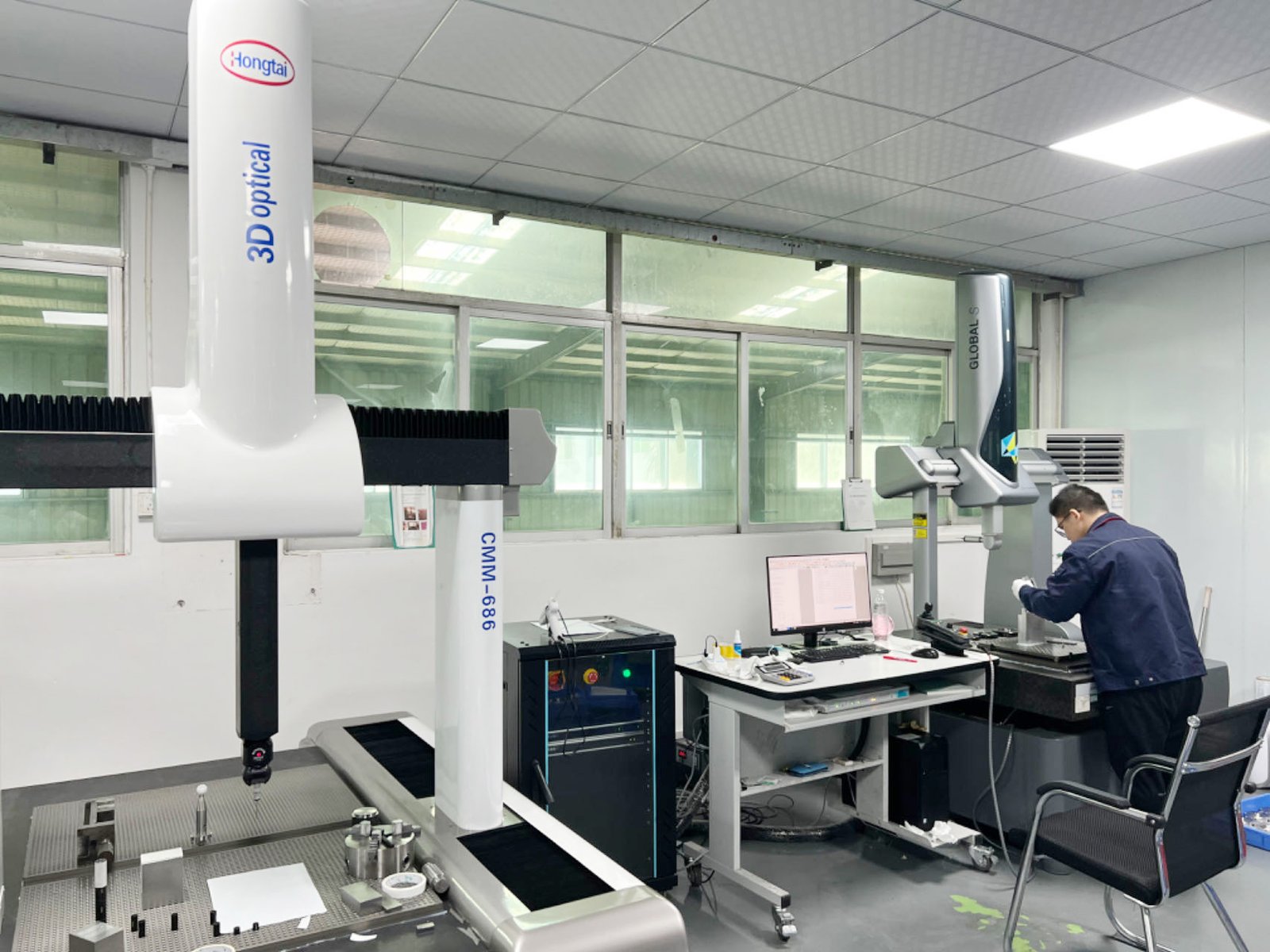
That is why a precision machining company anchors its claims in the pair. On the floor behind this site the tolerance is stated per process and verified per instrument — ±0.003 mm held on CMMs, process capability tracked at Ppk ≥ 1.67 initial — because a precision claim means nothing until a measurement confirms it. When you compare routes, hold them to the same standard: name the material, name the process, and name the measurement that proves the tolerance. A pair that cannot state all three is a slogan wearing a process name. And when a route adds heat treatment or a secondary finish to the pair — aluminum aging, low-temperature steel stress relief, anodizing, passivation — the quote should say who runs it and how the treated part is re-verified, because the finish is part of the pair, not an afterthought bolted onto it.
Which pairs belong on the CNC floor whatever the volume?
When the value of a part lives in toleranced features — a bore that locates a bearing, a face that seals, a thread that takes repeated assembly, a mix of turned and milled features on one blank — the CNC floor is the natural home at any quantity. Those features need a cutter and a CMM, not a mold or a die, and no alternative produces them without handing them back to machining anyway. A one-piece run of such a part belongs on the floor exactly as much as a ten-thousand-piece run does; only the fixtures and the routings change.
The material range on a precision floor reflects this. Aluminum, stainless steel, carbon and alloy steel, brass, copper, titanium, and magnesium, plus engineering plastics, all run under one roof, with incoming material verified against its certificate before cutting. When the buyer's question is "which pair fits my part," the floor can answer across the metal families instead of defending a single process. Parts whose function is precision — and whose failures are assembly problems, leaks, or wear — stay on the floor until an alternative proves it can deliver the same features at a better total cost.
When does casting or forging win the shape, and what comes back to the machine?
Casting and forging win when a part is mostly one big shape at volume: a housing, a pump body, a structural bracket running in thousands of pieces. The pair — cast alloy or forged steel with amortized tooling — beats machining from bar on material cost and rough-shape economics, and forging adds grain-flow properties that cutting does not create. If the part is a near-net shape with few critical interfaces, the cast or forged pair is often the right commercial call once volume is real.
The boundary that keeps machining in the program is the same in every metal: precision features are machined after the blank arrives. A casting does not hold a ±0.003 mm bore as-cast; a forged part does not come off the hammer with a sealing face at the required finish. The honest comparison is cast-plus-machine or forged-plus-machine versus machine-from-bar, priced with the same tolerance and finish call-outs. Below the volume where tooling amortizes, machine-from-bar wins on tooling cost and lead time — a precision floor runs one-piece minimums, so the route can be proven before the die is ever justified.
When does 3D printing take a part off the floor, and where does it hand it back?
Printing wins when the geometry is the product: internal channels a cutter cannot reach, lattices, conformal features, a single prototype where no tooling exists. For those shapes, additive is faster to first part and sometimes the only route. The printed pair also wins on iteration cost when the test is about fit rather than production tolerance, which makes it a legitimate competitor for early design checks that a precision floor would otherwise machine.
The hand-back is where precision lives. Printed surfaces and as-built tolerances cannot deliver a ±0.003 mm bore, a thread that takes real torque, or a sealing face at the finish a machined surface provides, so the features that mate with other parts come back to machining. A printed part also carries a different material story — printed metal and polymer do not share the properties of wrought stock, and load-bearing parts need that difference accounted for. Compare the pairs on the features and the material state, not on the glamour of the layer lines: printing owns the geometry only a layer can make, and machining owns the precision the drawing actually specifies.
When do forming, stamping, and MIM claim the part, and what does the part give up?
Sheet-metal forming wins when the part is a shell — an enclosure, a chassis, a bracket that is thin and bent — because machining a thin wall from solid stock wastes material and hours. Stamping and metal injection molding win at high volume on parts that suit a die, where per-part cost amortizes across tens of thousands of pieces. Each of those pairs is right for its silhouette, and each hands the interfaces back to machining: formed edges carry bend radii and springback, stamped edges are sheared rather than cut to a precision profile, and molded parts come out at molded tolerances that need a machine on the holes and sealing faces.
The give-up is worth putting on the comparison sheet. When a design is a formed body holding precision inserts — a stamped chassis with a machined bearing pocket, a MIM lever with a reamed pivot bore — the winning pair is a hybrid, and the quote should show both halves. Compare the routes on the interfaces that engage the next component, not on the bulk of the silhouette. The process that makes most of the part is only as good as the process that makes the feature that fails in service.
When does molding beat machining, and what does the drawing keep?
Injection molding wins when the part is plastic, the volume amortizes the mold, and the design is born to be molded: draft, ribs, snap fits. At that volume the molded pair is hard to beat on unit cost and consistency. Machining the same enclosure from a plastic billet only makes sense at low volume or when the material is an engineering plastic that a shop machines anyway, because molded commodity plastic and machined engineering plastic are different answers to different requirements, and a precision company's specialty may be exactly the machined plastic part the mold cannot make.
What every molded part keeps for machining is the precision: molded bores drift with shrinkage and cycle, molded sealing faces are not machined faces, and the tight call-outs on the drawing travel to a post-mold operation or a machined insert. The realistic pair for an enclosure with two precision bores and a sealing face is molded body plus machined features, quoted as one program. State the tolerance the same way you would on a machined print, and the quote will show which pair delivers it, that is the comparison doing its job.
How do you write the winning pair onto an RFQ?
The comparison only matters if the RFQ makes every supplier price the same thing. Write the file with the pair named: the exact grade and condition, the expected route (machine-from-bar, cast-plus-machine, molded-plus-machined), and the tolerance and finish the finished interfaces must hold. On a precision floor that is how the shop works anyway — incoming material is verified against the mill certificate, the process is matched to the grade, and the tolerance is confirmed by CMM before the part ships, as the quality page describes. Give the alternative-process suppliers the same call-outs, and they will price the same part or expose that they cannot.
Then compare the quotes on the pair. Ask each supplier to state the route it priced and the measurement behind the tolerance claim; a quote that matches your pair is comparable, and a quote that silently substituted a route is a different part with a lower number. The decision table fills itself once the file is fixed: unit cost at your quantity, tooling cost, lead time, and which features still need machining. That table, not the process names, is the decision, and the buyer's guide on the home page walks through the same discipline for every claim a supplier makes.
Frequently Asked Questions
Why is "machining vs alternatives" not the right comparison?
Because a process alone does not determine cost, tolerance, or surface — the material paired with it does. Machined 6061, cast aluminum with machined bores, printed polymer, and molded PEEK are different pairs with different answers, and the RFQ should compare pairs, not process names.
When should a part stay on a precision CNC floor at any volume?
When its function lives in toleranced features — a locating bore, a sealing face, a thread, a mix of milled and turned surfaces. Those features need a cutter and a CMM, and any alternative has to hand them back to machining, so the floor is the baseline the alternatives must beat.
Does casting or forging always beat machining at volume?
Only as cast-plus-machine or forged-plus-machine, because the precision features are machined after the blank arrives. Below the volume where tooling amortizes, machine-from-bar wins on tooling cost and lead time, and a one-piece minimum lets you prove the route before committing to a die.
When does 3D printing beat CNC machining?
When the geometry is the product — internal channels, lattices, shapes with no cutter access — or when the test is about fit, not production tolerance. The printed part then hands its precision features back to machining, because printed surfaces cannot hold what a cutter and a CMM can.
What tolerance can a precision machining company hold compared with other processes?
Milling and turning hold ±0.003 mm confirmed on CMMs, with process capability tracked at Ppk ≥ 1.67 initial, and grinding reaches tighter bands. Cast, molded, printed, and stamped surfaces do not hold those numbers as-produced, which is why the tolerance on the drawing decides how much of the part returns to a machine.
Does a molded or formed part always need machined features?
Its precision interfaces usually do. Molded bores drift with shrinkage, formed edges carry springback, and printed surfaces lack machined accuracy, so locating holes, threads, and sealing faces typically go to a machining step — the quote should price that step instead of hiding it.
How do I keep alternative-process quotes comparable?
Name the material-process pair on the RFQ — grade and condition, expected route, tolerances and finishes on the interfaces — and ask each supplier to state the route it priced and the measurement behind its tolerance claim. A quote for another route is another part.
Weighing CNC machining against another process for a precision part?
Email the STEP or IGES model with your toleranced 2D drawing to [email protected] or call +86 13126536955. You will get the design-for-manufacturability review, the material-process pair we would run, and the tolerance and measurement evidence each route can actually deliver.