
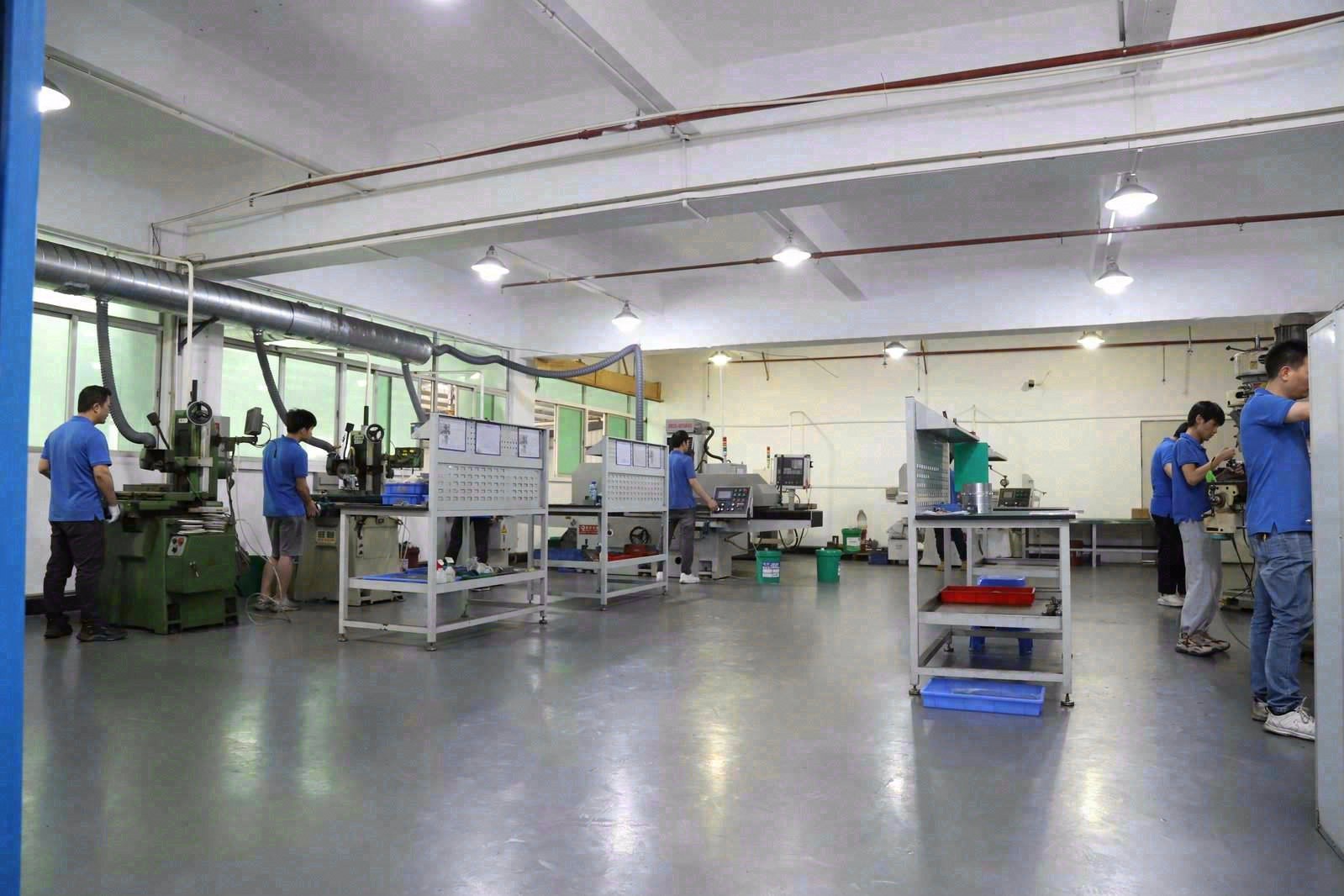
Every sourcing decision is a sequence of questions, and the precision machining buy has its own order because precision raises the cost of every mistake. A tolerance that a general shop would catch on the first article is caught on the drawing by a precision shop, and the difference is visible before the order if the buyer verifies the right things. This guide runs that verification: the entity behind the quote, the structure of the price, the capability for your geometry, the material control, and the first-article gate that turns the first part into a baseline.
Why is verification more important on a precision buy than on any other?
Precision machining is the part of sourcing where the tolerance story is the product. A general component can be recovered from a bad lot by rework; a precision part that misses its band is often scrap, and a precision program that inherits a bad supplier is a program that fights its own parts. The buyer's protection is not the contract — it is the verification completed before the order concentrates the risk.
Precision also concentrates the measurement burden. Every tight feature on the drawing demands inspection that the supplier must perform competently, and inspection competence is only visible in the measurement evidence. A buyer who has not verified how a shop measures has not verified the shop, because on precision work the measurement is half the job.
Distance raises the same stakes further. When the supplier is remote, the correction loop for a bad decision runs across time zones and freight legs, which is why the verification list should be complete while the order is still a decision. Every check costs minutes now and saves weeks later.
First, the entity and the certificates behind the quote
Start with the registered entity, because certificates, contracts, and customs documents all attach to the legal name. Confirm the name on the quote matches the certificates and the payment details, and verify the certificate numbers with the registrar rather than accepting logos. ISO 9001:2015, IATF 16949:2016 (product design excluded), and ISO 14001:2015 each carry a registrar reference that confirms the certificate is current, in the correct legal name, and scoped to the supplier's claims.
Read the scope line as carefully as the standard. A scope excluding product design confirms a build-to-print supplier, the arrangement most precision buyers use when they send released drawings with GD&T that only their engineers should change. A scope that does not match the claims is a finding that stops the conversation.
Confirm the floor is real with a live video walk-through aimed at a running machine and at the measurement bench. On precision work the inspection bench is part of the capability, and seeing it live tells you whether the CMM that will measure your part exists and is in use.
The entity check also protects the payment. A deposit is sent to the registered company that owes the parts, and a payment to a different name is a payment that cannot be recovered cheaply if the relationship fails. Confirm the bank details belong to the entity on the certificates, and treat any request to pay a third name as a finding. On precision work the money, the certificates, and the parts must all trace to the same legal company.
Second, the quote structure and the assumptions inside it
A precision quote is priced against assumptions — the material grade, the tolerance band on each feature, the setup count, the inspection scope — and an itemized quote exposes them while a lump sum hides them. Demand lines: material, machining, finishing, inspection, and freight separated, with setup visible and quantity breakpoints shown. The lines are what you compare and what you improve.
Read the inspection line against the drawing. Precision parts carry CMM time on their tight features, and the quote should reflect which features will be measured and how often. A quote that treats inspection as an extra has not priced the part as it will be delivered, because a precision part without its report cannot be released.
Read the engineering in the response. A precision quote should arrive with questions about tolerances that are over-tight for their function, datums that cannot be fixtured, or finishes that will cost more than the requirement needs. A shop that reads your drawing closely enough to question it is a shop whose quote you can trust.
The quantity curve is the last line to read, because it tells you whether the price will behave as the program grows. Precision setup and programming are fixed costs that divide by the run, so the per-part price should fall toward the material and cycle lines as quantity rises and flatten once the fixed cost is fully spread. A flat curve across quantities means the quote ignores its own setup, and a falling curve that flattens is the signature of a cost-based estimate. Ask for the price at your quantity and at double it, and read the shape before you commit.
Third, capability proven for your geometry and tolerance
Capability on precision work is proven with measured evidence, not paragraphs. Ask for a CMM report from a job in the same material family with the same kind of tolerance, and read it for how the shop builds its coordinate system from the drawing datums. The report on similar work is the closest reference you will receive before the first article.
The realistic envelope frames the evidence: milling and turning hold ±0.003 mm with capability at Ppk ≥ 1.67 at the initial study on key characteristics and Cpk ≥ 1.33 on general characteristics. Capability is reported per characteristic: every report names the feature, its tolerance band, the sample size, the sigma method, and the study window., and precision grinding reaches ±0.002 mm. Claims inside that envelope are credible when backed by reports; claims beyond it need proportionally stronger evidence. A shop that quotes precision without showing how it measures precision has not finished the conversation.
Ask which machines would make your part and how the order would be scheduled across them. The answer anchors the lead time to the floor and shows whether the supplier has the process chain your geometry demands — the milling, turning, and grinding mix that the drawing actually needs.
Ask about the part families the supplier runs regularly, because a shop that machines similar precision parts daily has the fixtures, the programs, and the inspection habits your drawing will inherit. A part that is a first for the shop carries learning cost that will surface in the price, the schedule, or the first articles. Regularity in your family is a capability signal that no certificate captures, and it is worth asking about before the order rather than discovering it at the first article.
Fourth, material control that holds the tolerance story together
Material identity is part of precision because a substituted alloy changes the machining behavior and the part's properties. Confirm that incoming stock is checked against its mill certificate before cutting — XRF is the standard method — and that the certificates ship with the parts. The check is where a wrong grade is either caught or admitted to the lot.
Ask to see the chain demonstrated on a real lot rather than described. A supplier whose records tie material source, machine, batch, and operator together can isolate a non-conformance to its exact batch, which is what a field problem demands. The traceability is part of the precision, because it is how a good lot stays good in the record.
State the grade and condition on the drawing so the certificate is matched to the callout. Precision work lives or dies on the material state — a free-machining grade versus a slow alloy changes the cycle time and the result — so the callout must be exact and the certificate must prove it.
Fifth, the first-article gate that releases the order
The first-article gate turns the first part into the baseline every later lot is judged against. Order the first article with the full documentation, demand its CMM report measured against the drawing datums, its finish readings, and its material certificate, and read the package against the drawing before any volume runs. The gate makes batch release conditional on measurement rather than on promise.
Read the report against the part, not just at it. Spot-check the critical dimensions with your own instruments where you can, confirm the datums match, and verify every critical callout appears on the report. A first article that agrees with your measurements is a baseline; one that does not proves nothing about your part.
Release volume in stages after the gate. A small pilot with its own inspection and SPC data confirms the process holds the baseline before full volume runs, and the production run starts from an approved geometry rather than from a hope. Each stage is a smaller bet than the one after it.
The baseline the first article establishes is also the record an audit reconstructs months later, so it deserves the same discipline as the production documents that follow. Keep the first-article report in a fixed format, measured against the same datums, so every later lot compares directly with it rather than with a reconstruction. On precision work the history is part of the precision, because a program that cannot show its parts stayed in band is a program whose claims cannot be verified.
What should the purchase order carry into the release?
The purchase order is the contract the release is made against, so it should carry the released drawing and revision, the material grade and condition, the tolerance and finish callouts, the quantity and incoterm, the documentation scope, the first-article gate, and the payment milestones. A PO that specifies these is one the supplier can build against and the buyer can hold to.
Include change-control terms at the same time. If the drawing or material changes during the program, the PO should say how the change is priced and whether it triggers a new first article. On precision work, unannounced process changes are the quietest way for a good part to become a bad one.
Consider payment milestones as part of the terms: a deposit tied to material, a balance against the inspection report and first article, and the remainder against shipment. Milestones tie the money to documented progress, which matters most on the first order with a newly verified supplier.
Which red flags should stop the order?
Some signals warrant a stop until proven otherwise: a lump-sum quote that hides the cost structure, no named legal entity for the certificates to attach to, certificate numbers that do not verify, no questions about the drawing, capability claims without measurement evidence, and payment in full before inspection data exists. Each is cheap to catch and expensive to discover after the run.
None is an automatic disqualification in isolation, but the combination — cheap, flat, no questions, no entity, and full payment up front — is the pattern the verification exists to catch. Precision buying rewards the buyer who stops early and asks for evidence over the buyer who hopes the low quote was a bargain.
Check the schedule promises with the same skepticism. A precision part that is promised too fast is either being routed to the wrong process or will arrive with its inspection skipped, because real precision work takes real time. Ask what the lead time includes — programming, first article, inspection, and the freight leg — and compare suppliers on the total to your dock rather than on the machining date alone. A date that is too good to be true usually is, and on precision parts the cost of the shortcut arrives in the measurement report.
After the order, the relationship is maintained by the same evidence that released it: every lot judged against the baseline, per-lot documentation required, certificates re-verified on a schedule, and notification required for any change. The discipline that released the supplier is the discipline that keeps it precise.
Frequently Asked Questions
What belongs on the verification list before a precision machining order?
Six items in order: the legal entity and certificate numbers with the registrar, the itemized quote with setup and material lines, the machining capability for your geometry and tolerance, the incoming material control, the first-article gate, and payment terms tied to milestones.
Why is the precision machining quote read line by line?
Because the lines carry the assumptions — the grade, the tolerance band, the setup count — and a quote priced against the wrong assumptions is a quote for a different part. An itemized quote is comparable and improvable; a lump sum is neither.
How is precision capability verified before the order?
Ask for a CMM report from a job in the same material family with the same kind of tolerance, and read it for how the shop measures against datums. Claims of ±0.003 mm and grinding at ±0.002 mm are credible only when backed by measured evidence from real work.
What material proof should a precision order require?
The mill certificate naming the grade and condition, plus the incoming check record that verified the stock against the certificate before cutting. On precision parts, a substituted alloy defeats the entire purpose of the tolerance work.
How does the first-article gate protect a precision order?
It makes release conditional on the first article's CMM report, finish readings, and material certificate being reviewed against the drawing before volume runs. The gate turns the first part into a baseline every later lot is judged against.
What should the purchase order specify?
The released drawing and revision, material grade and condition, tolerance and finish callouts, quantity and incoterm, the documentation scope, the first-article gate, and the payment milestones. A PO that specifies these is one the supplier can build against.
Which red flags stop a precision order?
A lump-sum quote, no named entity, certificates that do not verify, no questions about the drawing, capability claims without measurement, and payment in full before inspection evidence. Each is cheap to catch and expensive to discover after the run.
How is the relationship maintained after the first order?
Every lot is judged against the first-article baseline, per-lot documentation is required, certificates are re-verified on a schedule, and the supplier must notify you of any process or material change. The evidence that qualified the supplier keeps it reliable.
Run the verification list on a precision order?
Send the drawing, the material callout, and the quantity to [email protected] or call +86 13126536955. You will get the evidence in writing, an itemized quote, and a first-article gate you can approve before volume moves.