
Medical Precision Machining Company Materials, Documentation, and Tolerance Planning
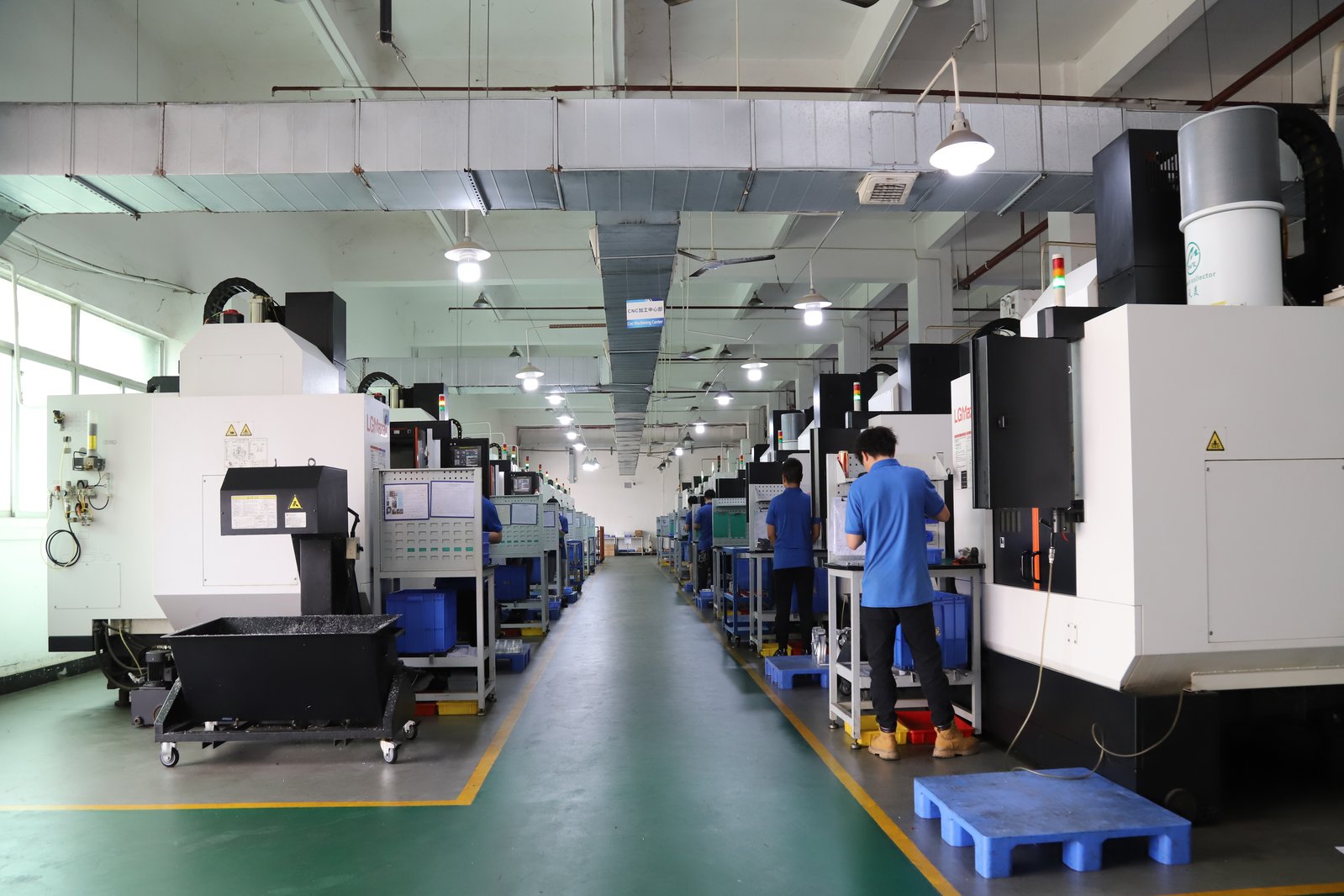
Medical device components machined by a precision machining company occupy a specific corner of manufacturing: the parts are often small and detailed, the materials are chosen for biocompatibility and corrosion resistance, the tolerances are tight on features that mate or seal, and the paperwork follows the part from the raw stock to the cleanroom bag. For a buyer, the work divides into three decisions to settle while the drawing is still open: which alloy or polymer to specify, how to tolerance the machined features so they are buildable and measurable, and which documentation has to ship so the part can enter a regulated assembly with confidence.
Why does medical machining turn on material and traceability together?
A medical part's material is not just a structural choice; it is part of the regulatory story. The device manufacturer carries the responsibility for biocompatibility and material validation, and that responsibility flows down to the supply chain as a requirement for traceable, documented material. A machined component in 316L stainless, titanium, or PEEK is only useful to the device maker if the grade is certifiable and the lot is traceable, because the material claim is audited as closely as the dimensions. Buying medical machining from a supplier that treats the certificate as routine is buying more than a part; it is buying a document chain the device file needs.
The buyer's version of the same fact is about the drawing. A medical drawing that names the alloy or polymer, the condition, and the surface finish is a drawing that can be quoted, machined, and verified; one that leaves the material open is a drawing that will cost twice as much in validation time. When the material and the documentation requirements are in the RFQ from the start, the supplier can price the certificate, the inspection, and the finish into the quote rather than discovering them after the parts are made.
Which materials should a medical machining RFQ actually name?
Medical machining draws on a narrow, well-defined material list, and the drawing should name the grade precisely because each one carries its own machining and documentation story. On the metal side, 316L stainless dominates instrument and implant-adjacent hardware for its corrosion resistance and cleanability; 17-4PH appears where strength after aging is needed; titanium grades — commercially pure and Ti-6Al-4V — appear where strength-to-weight or biocompatibility is the driver. On the polymer side, PEEK is the engineering workhorse for structural and implant-adjacent parts, with POM and other medical plastics covering lower-load components.
| Material | Typical medical use | Machining notes | Buyer notes |
|---|---|---|---|
| 316L stainless | Instruments, housings, hardware | Work-hardens; light cuts and support for thin walls | Require the mill cert; passivation where the spec demands it |
| 17-4PH stainless | High-strength components, actuators | Machined soft, aged to H900–H1150 | Specify final condition and the heat-treat record |
| Ti-6Al-4V / CP titanium | Implant-adjacent, structural hardware | Slow cutting, rigid setups, tool wear | Traceability to the heat is mandatory |
| PEEK | Structural polymers, implant-adjacent parts | Cuts cleanly with sharp tooling; burr control matters | Specify the grade; document the lot |
| POM / medical plastics | Handles, guides, low-load components | Fast machining; chip and burr control | Confirm the medical-grade designation |
Two buyer rules keep the material line honest. Name the grade and condition on the drawing, and require the material certificate with the heat or lot number at receiving. And confirm the finish system — passivation for stainless, anodizing where aluminum appears, cleanliness levels where the part demands them — because the finish is part of the material's behavior in a medical assembly.
How tight should you tolerance medical machined features, and where does that drive cost?
Medical drawings carry tight tolerances on the features that matter — mating surfaces, sealing faces, and features that interact with other components — and general tolerances everywhere else. The discipline is the same as in any precision industry: put the tight band where function needs it, express it with GD&T against defined datums, and let cosmetic and clearance features breathe. A drawing that tightens everything to the same band pays precision prices on features that never needed them, and in medical work the inspection cost multiplies because the reports are part of the device file.
What a precision machining floor holds, stated plainly, is ±0.003 mm on milling and turning, ±0.002 mm where the feature is precision-ground, and process capability of Ppk ≥ 1.67 at the initial study on the key characteristics you flag. The capability number matters in medical work because the process must be demonstrated, not asserted — a dimension held by luck on one part is not a process, and the device file wants the Cpk evidence on the characteristics that carry function. Mark the three or four features that matter, and the supplier prices the CMM time and the SPC record where the validation needs it.
Two medical specifics belong in the tolerance conversation. Small parts demand fixturing that holds them without distortion, so thin-wall features need a support strategy written into the plan rather than discovered at inspection. And surface finish is frequently functional in medical parts — a sealing or mating face carries a finish callout that must be measured and reported, not assumed from a nice cut.
Which GD&T callouts should a medical machining drawing carry?
A medical drawing should carry the GD&T that makes the part verifiable against the datums, because the inspection report is what the device file will retain. Datums should sit on features that exist in the machined part and are stable to fixture, so the CMM can measure what the drawing defines. Position on hole patterns, profile on contoured surfaces, and flatness and parallelism on mating faces are the callouts a precision floor can both hold and measure.
The verification side matters as much as the callouts. A medical part should ship with a dimensional report that maps each callout to a measured value against the drawing datums, and finish data on the functional faces. When the position of a hole pattern and the finish of a mating face are reported against the same datum scheme, the drawing, the machining, and the inspection are one system, and the report becomes the evidence a device audit can rely on. A report that shows measured values and named instruments is worth more than a certificate of conformance that asserts them.
What documentation should a medical machining order ship with?
Medical buyers are buying evidence, and for a machined component the evidence has to satisfy the device manufacturer's audit, not just the buyer's incoming inspection. The list below is the one to put on the order so the document chain is complete:
- Material certificate. The mill's certificate with chemistry and the heat or lot number, tied to the stock that was actually cut. No mill cert, no traceable material, and no entry into a regulated assembly.
- Certificate of conformance. The supplier's signed statement that the parts meet the drawing revision ordered. Useful, but it is a declaration, not evidence on its own.
- Dimensional inspection report. CMM results mapping the GD&T callouts to measured values against the drawing datums.
- Surface-finish data. Ra or Rz measurements on the functional faces, since finish is frequently functional on medical parts.
- Material and finish records. Heat-treatment certificates and passivation or anodizing records where the spec requires them.
- First article inspection. Where the contract requires it, a report verifying every drawing characteristic on a representative part before production commits.
Traceability matters as much as the papers: every part number should trace to the heat or lot that produced its stock, so that a material question surfacing later is resolvable in minutes. The quality page on this site describes the inspection practice that produces this evidence as routine — it is the standard to hold any precision machining supplier to.
How do you check a machining supplier's medical quality claims before you commit?
Medical quality expectations come from the device manufacturer's regulatory obligations, and they flow down the supply chain as contractual requirements rather than universal certificates. ISO 13485 is the quality management standard for medical devices, and a device maker whose chain requires it will state that in the contract; it is not a certificate every machine shop holds, and it should not be assumed. A build-to-print machine shop that is ISO 9001:2015, IATF 16949:2016 (product design excluded) and ISO 14001:2015 certified can serve medical component work under a quality agreement, but if your chain demands ISO 13485, that must be in the RFQ so the supplier can confirm or decline honestly. The buyer's gate is the contract's requirement, stated explicitly.
Beyond certificates, verify the practice that matters for medical work: material traceability, dimensional evidence, and change control. Ask for a redacted sample of the reports you will receive — a CMM report with the datum scheme visible, a material certificate with a heat number, a finish measurement with the instrument named. Ask how the supplier handles a drawing revision, because a silent change on a medical part is a change to a regulated component. And ask who reads the drawing before the quote — the answer tells you whether the shop understands that on a medical part, the paperwork is part of the product.
How should prototypes and first articles gate into a medical production run?
The first article on a medical part is the point where the drawing, the process, and the documentation meet for the first time, and it should be treated as a gate. Machine the first article, inspect every drawing characteristic, and review the report before the production quantity is committed — a datum problem or an unholdable tolerance caught at the first article costs days; one caught after a full run costs weeks and a quarantine. The same material condition, the same program, the same fixture strategy, and the same finish system should carry into production; a change in any of them means the first article no longer represents the run.
Once parts move, the control shifts to process stability and record discipline. Key characteristics should have a sampling plan and a Cpk target of ≥ 1.67, so a dimension drifting toward the limit is caught before it produces a bad batch that has to be quarantined. Drawing revisions need the same discipline — a revision arriving silently mid-run invalidates the inspection records for everything before it, and on a medical part the records are part of the device file. Keep the revision letter on the PO, on the drawing, and on the reports, and the traceability stays intact from first article through production.
What belongs in a medical machining RFQ so the quote comes back useful?
A medical RFQ that produces a useful quote is a short document with specific content. Send a STEP or IGES model plus a 2D PDF that names the material grade and condition, the general tolerance, and the GD&T on the characteristics that matter — including the surface-finish callouts on functional faces. State the quantity, the target date, and the documentation list: material certificate, dimensional report, finish data, and any finish or heat-treatment records. If you operate under a quality agreement or a supplier approval requirement, attach the requirements so the supplier can confirm it can meet them before quoting rather than after.
Two details make medical machining quotes noticeably better. First, mark the key characteristics — the features that need the tight band, the Cpk note, and the CMM time — so the inspection is priced where the validation needs it. Second, state the cleanliness and finish expectations explicitly: whether passivation, a specific surface finish, or a cleanliness level is required, because each is a process step with its own cost and its own record. For the program and quoting overview, the services page on this site covers what the RFQ stage includes, and the FAQ page answers the material, documentation, and lead-time questions buyers raise most often.
Frequently Asked Questions
Is ISO 13485 required to machine medical components?
Only if your quality chain requires it. ISO 13485 is the medical device quality management standard, and device makers whose chains demand it will state that in the contract. A machine shop holding ISO 9001:2015, IATF 16949:2016 (product design excluded) and ISO 14001:2015 can serve medical component work under a quality agreement, but the requirement should be in the RFQ so the supplier can confirm or decline honestly.
Which materials are used most in medical precision machining?
316L stainless for instruments and hardware, 17-4PH where strength after aging is needed, titanium for strength-to-weight and biocompatibility, and PEEK for structural polymers. Name the grade and condition on the drawing, and require the material certificate with the heat or lot number.
What tolerance should I call out on a medical machined part?
Only what the function needs, expressed with GD&T against defined datums. A practical precision band is ±0.003 mm on milling and turning, ±0.002 mm on ground features, with Ppk ≥ 1.67 at the initial study on the key characteristics your drawing marks. The capability evidence matters because it is part of the device file.
Why does surface finish matter on a medical part?
Because finish is frequently functional — a sealing or mating face carries a finish callout that affects how the component behaves in the assembly, and in some cases how it cleans or sterilizes. Finish should be measured and reported on the functional faces, with the instrument named.
What documents should a medical machining order ship with?
A material certificate with the heat or lot number, a dimensional report mapping the GD&T callouts to measured values, finish data on the functional faces, and any heat-treatment or finish records the spec requires. The first article report verifies every drawing characteristic before production commits.
Can PEEK parts be machined to tight tolerances?
Yes, with the right approach. PEEK cuts cleanly with sharp tooling, but it is a polymer — it deflects under clamping and cutting force and moves with temperature, so thin-wall features need support and critical dimensions need measurement at a defined temperature. Name the grade and machine the features with the same discipline as metal.
How do I verify a medical machining supplier from my desk?
Ask for the certificate numbers and check them with the registrar, then ask for redacted samples of the reports the supplier actually produces — a CMM report with the datum scheme, a material certificate with a heat number, a finish measurement. And ask how drawing revisions are handled, because on a medical part a silent change is a change to a regulated component.
Putting a medical precision-machined part out to quote, and unsure which material, tolerance, finish, or document set the drawing should carry?
Send the model, the drawing, and the quantity. You will get back a material-and-tolerance read, the finish plan for the functional faces, the documentation package, and a delivery date that holds. Email [email protected] or call +86 13126536955.