
How to Choose a Precision Machining Company Supplier Online: A 30-Minute Screen That Works
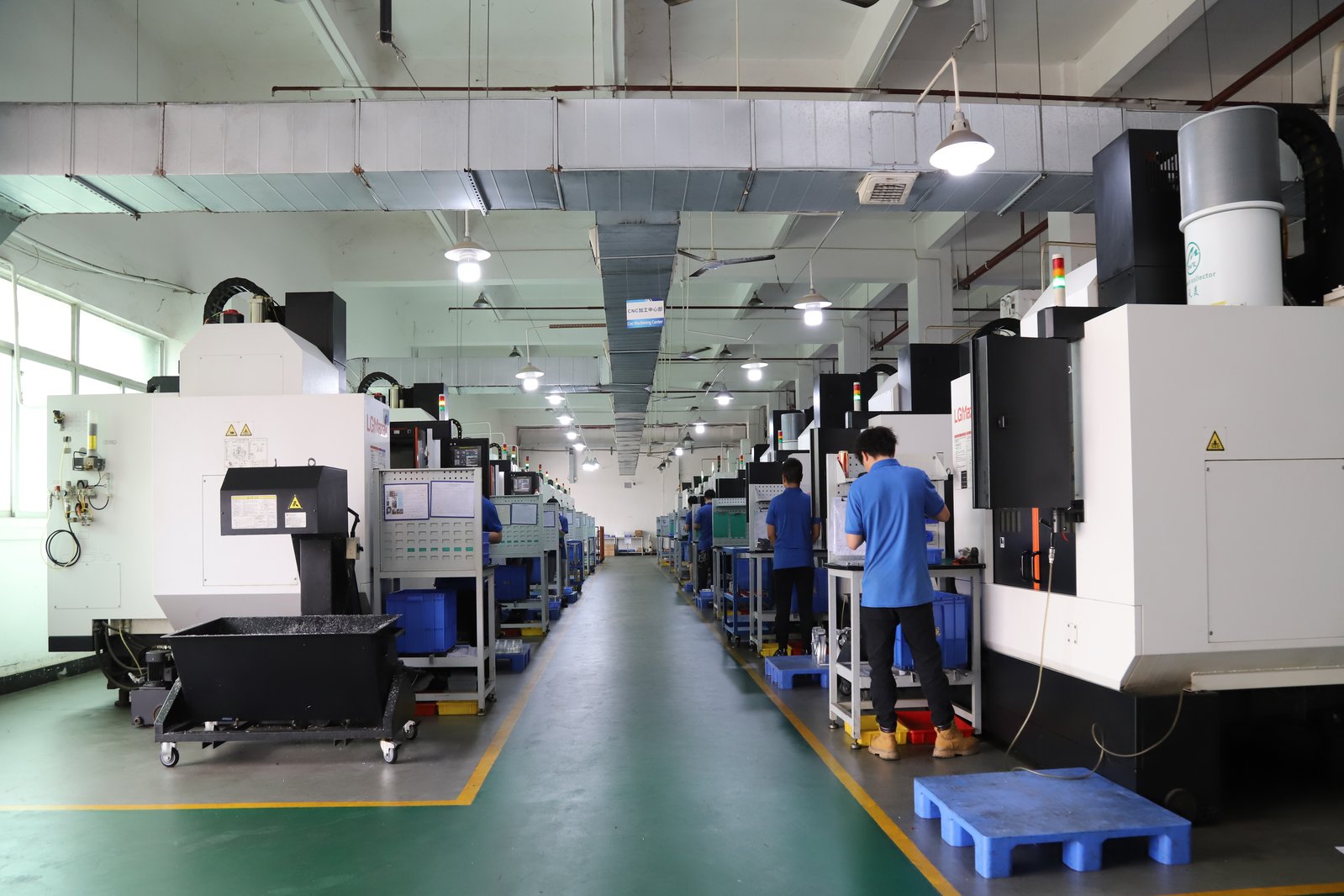
Choosing a precision machining company from a browser is not about finding the shop with the most impressive website — it is about checking whether the company's precision claim can survive a document check and a drawing review. In thirty minutes, without a factory visit, a buyer can screen a supplier down to the shortlist that deserves a drawing. The screen tests the entity behind the brand, reads the machine and metrology narrative for what it omits, checks the certificate numbers against the registrar, and watches how the company responds to a specific tolerance question. This guide is the step-by-step screen, built on the precision-company checks this site teaches — DFM review, measurement evidence, machine list, verifiable certificates — turned into concrete browser actions with a clear red-flag exit at every step.
What can a 30-minute online screen actually settle before you send a drawing?
Be honest about the screen's power. In thirty minutes you cannot verify a CMM report, audit a factory floor, or test a process in production. What you can do is eliminate the suppliers who should never see your drawing, and rank the rest into a shortlist that earns the next, more expensive step — a phone call, a DFM review, or a trial order.
The screen works by testing four claims in order, and each test is cheaper than the one after it:
- Is the entity real and stable? The name on the website can be anything; the legal entity behind it is what owes you the quality. The company page should name the registered entity, its registration number, and its address — facts you can check rather than claims you must trust.
- Does the capability narrative hold together? A precision machining company should name its machines by brand and model, its measurement instruments by type, and its tolerance band by number. Vague claims — "we do precision work" without a number or a machine list — are the first thing the screen eliminates.
- Are the certificates verifiable? A logo proves nothing; a certificate number you can confirm with the registrar does. The screen checks for numbers, not just badges.
- Does the company read drawings or just quote them? The most powerful browser test is the last: ask a specific tolerance and material question about your own part and watch how the answer comes back. A company that flags geometry problems and asks clarifying questions is reading your drawing; one that answers with a price and a date is quoting a brochure.
The screen is not the audit — it is the gate before the audit. What it produces is a shortlist small enough that the deeper checks, and the trial order, become affordable.
Which company facts should the first ten minutes pull from the site?
The first ten minutes belong to the company, not the machines, because the entity is where the risk lives. Work through these checks in order:
- Find the registered legal entity. The site should name the company that actually invoices and holds the certificates — on this site, Dongguan Zhuohang Ltd with its registration number stated plainly. A supplier that hides the legal entity behind a brand name is a trading-desk signal before you look any further.
- Match the entity to the certificates. The ISO 9001, IATF 16949, and ISO 14001 certificates should be held by the entity that invoices you, not by a sister company or a logo on a brochure. On this site the certificate numbers are published — 116024/A/0001/UK/En, 131941/A/0001/SM/En, and 116024/B/0001/UK/En — so the buyer can confirm them with the registrar without asking.
- Check the address and the facility story. A real factory names its location and its floor. Here it is a 6,800 m² facility in Hengli Town, Dongguan, with production, inspection, and offices under one roof. The address should be specific enough to visit or verify, not a post-office box.
- Read the founding and scope honestly. A manufacturer founded in 2005 with 100+ employees and a stated scope — build-to-print, with IATF 16949 excluding design under Clause 8.3 — is describing what it does and does not do. That honesty is itself a signal.
The test at the end of ten minutes: can you write down the legal entity, its registration number, its address, and its certificate numbers from what the site published? If the answer is no, the screen has already done its job. The precision-company checks on this site's guide explain why each of these four signals — entity, machines, metrology, certificates — is worth testing before a drawing is sent.
How do you read a machine list and a metrology bench for what they prove?
The next ten minutes test the capability narrative — whether the precision claim is backed by named equipment. Two lists matter, and both should be specific:
- The machine list by brand and count. A precision company should say how many machines and which brands. On this floor it is 100+ production machines across Mazak, Brother, Citizen, Star, and Tsugami — milling, turning, mill-turn, and grinding — with 20+ inspection instruments alongside. Brands matter because they set the machine's rated capability, and counts matter because they set capacity. A site that names neither is describing precision as a mood.
- The measurement bench by instrument type. Precision is only as real as the measurement behind it. The metrology list should name the instruments — a Hexagon CMM for dimensional verification, a KEYENCE laser microscope and SURFCOM profilometer for surface finish, an XRF spectrometer for alloy confirmation at incoming. If the site names the instruments, the company is built around measurement; if it only names machines, the tolerance claim has no verification leg.
Read the two lists against each other. The machine list sets what the shop can cut; the measurement bench sets what it can prove. A precision machining company needs both — the tolerance is claimed on the machine and proven on the bench, and a buyer who sees only one half of the story should ask for the other half before spending another minute.
Which precision signals can you verify from a browser, and which need a call?
Not everything on a precision claim can be settled from a browser. Separate what you can verify now from what genuinely needs the next step:
- Verifiable from the browser: the legal entity and registration number; the certificate numbers (checked against the registrar's public list); the machine brands and counts; the metrology instrument types; the tolerance band stated in numbers; the facility size and address; the scope statement, including what the company does not do.
- Needs a phone call or video walk-through: whether the machines on the list are actually on the floor; whether the CMM reports ship with the parts or only exist on request; how a DFM review is run and who reviews the drawing; the response time and the quality of the answers to engineering questions.
- Needs a trial order: whether the process capability claim — Ppk ≥ 1.67 at the initial study on key characteristics and Cpk ≥ 1.33 on general characteristics. Capability is reported per characteristic: every report names the feature, its tolerance band, the sample size, the sigma method, and the study window. — holds on your part, whether the documentation arrives complete, and whether the supplier's promises survive contact with a real purchase order.
The discipline: do not let a browser-verifiable signal go unverified, and do not pretend a browser can replace the call or the trial. The screen's job is to make the call worthwhile and the trial order cheap, not to substitute for either.
Which red flags should end the screen on the spot?
Some findings are not warnings — they are exits. End the screen immediately when you see any of these:
- No legal entity, or a hidden one. A site that sells precision machining but never names the company that invoices is not a manufacturer you can audit.
- Certificate logos without numbers. A badge with no certificate number you can confirm is decoration. The registrar check is the whole point of asking for numbers.
- Tolerance claims with no measurement evidence and no metrology list. "We hold tight tolerances" without naming the CMM, the profilometer, or the SPC record is a claim with no verification leg.
- No machine list, or brands that cannot be reconciled. A precision capability lives in specific machines. A company that will not name them is either not running them or not running the ones it claims.
- Answers that never engage with the drawing. When you ask a specific tolerance and material question, a brochure answer — "we can do it, send the file" — with no engineering question back is the single clearest red flag on the list. A company that reads drawings asks about geometry, material state, and inspection; one that does not is quoting from a menu.
These red flags are cheap to find and expensive to ignore. Every one of them saves you the cost of the deeper checks that would have found the same problem later — after the drawing was sent or the deposit was paid. The quality system page shows what the measurement evidence behind a passing screen looks like in practice.
How do you turn the survivors into a shortlist that earns a drawing?
The screen ends with a shortlist of suppliers who passed the entity, capability, and certificate checks and responded to a drawing question like engineers. The shortlist is where the deeper work begins:
- Ask each survivor for a DFM review of your actual drawing. The review is the tell — a company that flags geometry and tolerance problems before quoting is reading your part. Compare what each one found, not just what each one priced.
- Ask for a real CMM report or SPC chart from a past job. The document shows whether measurement evidence is routine or requested-on-demand. A sample of past measurement data tells you how the company proves precision in practice.
- Arrange a call or a video walk-through of the floor. The machine list should reconcile to running machines, and the metrology bench should exist where the site says it does. Thirty minutes on a video call closes most of the gap the browser cannot.
- Place a trial order — one prototype, CMM-verified to the same standard as a run. The trial order is the real audit: it tests the drawing review, the material verification, the measurement evidence, and the documentation in one small transaction before you commit volume.
The thirty-minute screen does not choose your supplier. It builds the shortlist that deserves the drawing, the call, and the trial order, and it does it by testing the four things precision actually depends on: the entity, the equipment, the evidence, and the engineering response.
What should your first message to a screened supplier contain?
Once the shortlist is set, the first message should do double duty: it should give the supplier enough to respond seriously, and it should give you a test of how they respond. Send:
- The drawing or a clear part description — material by grade, the tolerance band that matters, the quantity, and the surface finish if it is functional. A precision supplier needs the tolerance context to respond usefully.
- Your two or three specific questions — for example, which process would hold the tightest feature, what the CMM report will show, and how the first article is verified. The answers separate the shop that reads drawings from the one that quotes them.
- Your documentation expectation — state that the order should ship with the material certificate, XRF record, CMM report, and SPC data where capability matters. A supplier who commits to the documents in the first exchange is running a measurement-based operation.
The responses to that first message are the final filter. A supplier who asks a clarifying question about the geometry or material has read your request; one who answers with a price and a date has not. The difference is the entire screen in miniature, and it is the difference between a precision machining company and a shop that uses the word.
Frequently Asked Questions
How do I choose a precision machining company online?
Run a thirty-minute screen that tests four claims in order: the legal entity behind the brand (registered name, number, address), the capability narrative (machines by brand and count, metrology by instrument type, tolerance band by number), the certificates (numbers you can confirm with the registrar), and the engineering response (how the company answers a specific tolerance question about your part). End the screen on any red flag, and turn the survivors into a shortlist that earns a DFM review and a trial order.
What should a precision machining company's website show?
A real precision company names its legal entity and registration number, its facility and location, its machine brands and counts, its measurement instruments, its tolerance band in numbers, and its certificate numbers, and states its scope honestly, including what it does not do. A site that sells precision without naming any of these is describing a mood, not a capability.
Can I verify a supplier's certificates online?
Yes, if the supplier publishes certificate numbers. The certificate number is what you check against the registrar's public records — a logo proves nothing. On this site the numbers are published: ISO 9001:2015 (116024/A/0001/UK/En), IATF 16949:2016 (131941/A/0001/SM/En), and ISO 14001:2015 (116024/B/0001/UK/En). If a supplier shows badges but no numbers, that is the first red flag.
Is a DFM review a good test of a precision supplier?
Yes — it is the best cheap test available. A DFM review of your drawing shows whether the company reads geometry and tolerance like engineers or quotes from a menu. A supplier that flags thin walls, deep holes, or tolerance bands that fight the geometry is reading your part; one that answers with a price and no questions is not. Ask for the DFM review before you compare prices.
What tolerance should I expect from a precision machining company?
Expect a stated working band, not a vague promise. On this floor, milling and turning hold ±0.003 mm and precision grinding holds ±0.002 mm, with critical dimensions verified on Hexagon CMMs and process capability held to Ppk ≥ 1.67 at the initial study on key characteristics and Cpk ≥ 1.33 on general characteristics. Capability is reported per characteristic: every report names the feature, its tolerance band, the sample size, the sigma method, and the study window. The number only means something when the measurement evidence behind it ships with the parts.
How important is a trial order when choosing a supplier?
A trial order is the real audit. One prototype, CMM-verified to the same standard as a full run, tests the drawing review, the material verification, the measurement evidence, and the documentation in a single small transaction. It is the cheapest way to learn whether the supplier's precision claim survives contact with an actual purchase order.
What is the minimum order quantity for a trial?
One piece. With no minimum order quantity, a single prototype can be verified to the same tolerance standard as a production run, which makes the trial order affordable and the supplier screen conclusive before you commit volume.
Looking for a precision machining company that will read your drawing before it quotes?
Send the drawing and your tolerance question. You will get a DFM review that flags the real geometry issues, the measurement evidence behind the tolerance band, and the certificate numbers you can check yourself. Email [email protected] or call +86 13126536955.