
Precision Machining Company Cost in 2026: What a Precision Supplier's Quote Should Really Show
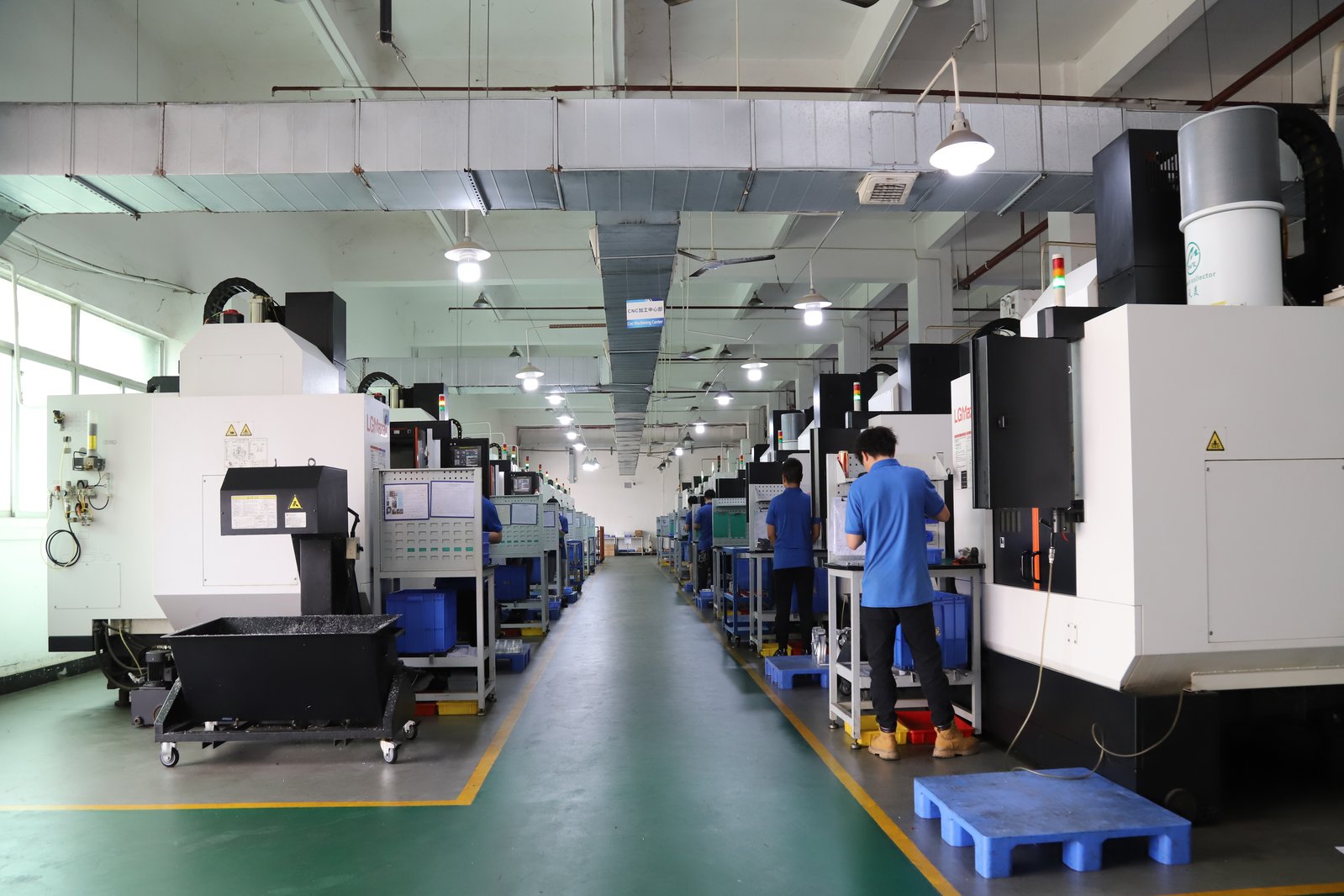
When you buy from a precision machining company, you are not paying for metal removal. You are paying for a company that can hold and prove a tolerance, which is a different purchase, with a different cost structure. The metal removal is the same on any CNC floor; the difference is in the design-for-manufacturing review before the quote, the process capability behind the band, the CMM time that verifies each tight feature, and the report that ships with the parts. This guide is the buyer's cost model for a precision machining company in 2026: the line items behind a precision quote, why the tolerance you actually need — rather than the tightest one you can name — sets most of the price, how material and quantity move the total, what a precision quote should itemize, and a three-step method for building a budget you can defend to engineering and finance alike.
What does a precision machining company quote actually contain?
Every honest precision quote is the same five lines, and the precision shows up in every one of them. The material line carries verification, the machining line carries the tighter cycle, the setup line carries the careful fixturing, and the inspection line carries the CMM time and the report.
| Line item | What it pays for | What moves it |
|---|---|---|
| Material stock | The bar, plate, or billet at the grade on the drawing | Grade, temper, and traceable certified lots |
| Machining time | Spindle minutes at controlled feeds to hold the band | Material, feature count, and tolerance per feature |
| Setup and programming | Fixturing strategy, toolpath work, first-piece prove-out | A one-time cost, heavier when the fixture must hold a datum scheme |
| Finishing and special processes | Anodizing, passivation, plating, heat treatment | Metal-specific and dimension-changing; a line of its own |
| Inspection and documentation | CMM time, SPC evidence, dimensional reports, material certificates | The tolerance band and the GD&T categories set the measurement scope |
There is no honest single number for what precision machining costs, because the drawing decides it, and on a precision drawing, the tolerance allocation decides most of it. The structure is the same at every supplier; the differences show up in which lines are listed and which are absorbed.
How much does the tolerance you actually need move the price?
Machining cost is nonlinear in tolerance. Moving a feature from ±0.1 mm to ±0.003 mm can more than double the price, because the machine, the setups, the tooling, and the inspection method all change at once. Dropping a critical surface to ±0.002 mm moves it to grinding, a separate process family. On the floor behind this site, milling and turning hold ±0.003 mm on critical features and precision grinding reaches ±0.002 mm, with process capability tracked under SPC at Ppk ≥ 1.67 initial — a recorded Cpk of 1.851 on a representative length shows the process is centered and inside the band, not scraping past it. That capability number is part of what a precision company sells, and it is worth asking for, because it is the difference between "we can hold it" and "we prove we hold it run after run."
Read the tolerance band before you read the index. Cpk is a ratio of the tolerance band to the process spread, not an absolute measure of accuracy. The figure above was recorded on a length characteristic with a 0.4 mm band (76.1–76.5 mm) — wide by design. Hold the same process spread against a ±0.005 mm feature and it fails outright. Ask for the band, the subgroup count and the sampling window on every capability number a supplier quotes.
The practical rule is to specify the tolerance the fit needs, not the tightest tolerance you can name. Measurement scales with the band and the instrument: a general feature is checked with hand tools, a ±0.003 mm feature needs CMM time against your datum scheme, and a ground seating surface needs a roughness instrument. Ask what will be measured, with what instrument, and how often during the run, and ask to see a sample report from a completed job in a similar material before you compare totals. Reserve the tight band for the features that engage another part — bearing bores, mating faces, seal seats — and leave the rest on the general block. Each tight callout that adds CMM time and a slower cycle is a priced line, and a drawing that blankets everything at ±0.003 mm is paying a precision price for features that do not use it. The design-for-manufacturing review is where that allocation gets read: a precision company flags the features that are tighter than the function needs before it quotes, because fixing them on the drawing is the cheapest cost reduction available.
Which material should a precision budget assume?
Material moves the price twice: once as stock, once at the spindle. Aluminum 6061 is the least expensive precision metal to machine, cutting fast and holding the ±0.003 mm band predictably; 7075-T6 adds strength at a higher mill price. Free-machining grades such as 303 stainless or 12L14 steel keep turned parts economical, while tougher grades — 304, 316, and especially titanium — cut slower, wear tools, and push the cycle out. For a precision part, the material also decides how hard it is to hold the band across a run: aluminum moves roughly 23 micrometers per meter per degree Celsius, about twice steel, so a tight dimension in aluminum needs more thermal discipline than the same dimension in steel. And if the part carries a finish, name it on the first quote: anodizing grows the dimension, so the allowance must be machined in, and a precision part reviewed with its finish is a part whose final size is predictable rather than discovered. Name the grade on the drawing, verify the company checks incoming stock against its mill certificate, and let the DFM review connect the material to the tolerance, that connection is where precision cost is really decided.
How do quantity and program stage change the unit price?
The one-time lines — setup, programming, fixturing, first-article inspection — are fixed whether you order one part or a thousand, so a prototype carries them all on one piece. That is why precision prototype quotes look expensive and why comparing them to production without the quantity context misleads. Minimum order here is one piece, with prototypes on the same machines and tolerances as production, so the prototype price is the honest anchor and the production tier shows the fixed lines spread thin. Lead time tracks the same process count — roughly 3 days for simple parts, 7 days for standard parts, and up to 30 days for complex parts with many steps or finishing — and when the date and the price come from different process counts, the quote is describing two different parts. Between the prototype and the production run sits the bridge order, ten to fifty parts that exercise the fixtures, the measurement loop, and the documentation before you commit volume; a supplier that quotes all three tiers is showing you the whole cost curve instead of its two ends. The iteration loop is part of the same curve: every design revision triggers a new first-article check and a new report, and a supplier that prices the revision loop as its own line is giving you the real cost of learning rather than hiding it in the margin of the parts that pass.
What should a precision quote itemize so you can compare suppliers?
A precision quote you can compare states its assumptions about both the tolerance and the proof. Make sure each supplier shows the tolerance and GD&T it will actually hold per feature, the measurement method and what the report will contain, the process route for each feature, the material grade and how the lot is verified, the finishing included and who performs it, and the quantity tier with prototype and production separated. When a line is missing, assume the cost is hiding rather than absent: a quote that promises ±0.003 mm without a CMM line has priced the part but not the proof, and on precision work the proof is the product. Ask to see a sample dimensional report and SPC chart from a completed job in a similar material — the report is the only part of the tolerance you can audit after the parts ship. Verify the company behind the quote as well: a real precision machining company names its machines, its CMMs, and its certificate numbers, and the numbers are checkable with the registrar. A supplier that cannot name its floor or its metrology has not priced the product — it has priced a promise.
How do you build a 2026 precision budget you can defend?
Build the budget the way the company would review the drawing — tolerance first, material second, quantity third.
- Get the DFM review before you fix the number. Send the drawing and ask the supplier to flag the features that are tighter than the function needs, the geometry that fights the tool, and the material-tolerance combinations that will be expensive to hold. Fix the drawing first; then budget the fixed drawing, not the first draft.
- Quote a prototype at MOQ 1. One piece, on the same machines and tolerances as production, with first-article inspection. The prototype quote is the honest anchor: it shows the fixed costs at full weight and proves the drawing is machinable and measurable as written.
- Quote the production tier on the same page. The same company gives you the per-unit price at your planned quantity, the Cpk evidence the process is expected to run at, and the lead-time tier your process count earns. Compare suppliers only when all quotes state the same tolerance scope, material grade, and measurement plan.
Keep the closing rule in front of you: the cheapest precision quote is rarely the cheapest part in service, because a tolerance without evidence arrives as a risk, not a saving. Price the part and the proof together, and the 2026 budget you build will survive contact with the first inspection report. The capacity behind the date matters too: a floor with 100+ machines and 20+ inspection instruments can schedule a prototype without displacing a production program, which is what keeps the 3-day tier and its price real instead of theoretical.
Frequently Asked Questions
How much does precision machining cost in 2026?
No honest company quotes a price without a drawing, because the price is set by the number of tight features, the material grade, the process count, and the quantity. A simple 6061 part with few tight callouts at production quantity sits low; a complex part in a tough grade with many GD&T callouts at prototype quantity sits far higher.
Why is a precision quote more expensive than a general machining quote?
Because the precision part carries the CMM time, the SPC discipline, and the documentation that turn a tolerance into evidence. A general quote that promises the same band without the measurement has not priced the same product.
What tolerance can you hold, and what does specifying it cost?
Milling and turning hold ±0.003 mm on critical features; precision grinding reaches ±0.002 mm for sealing and seating surfaces, with process capability tracked at Ppk ≥ 1.67 initial under SPC and critical geometry verified on CMMs. Cost rises with each step because the machine, the setups, the tooling, and the inspection method all change.
What is the minimum order for a first precision part?
One piece. Prototypes run on the same machines and tolerances as production, with first-article inspection, so you can validate the fit before committing volume.
What is your lead time, and does it affect the price?
Lead time tracks process count: roughly 3 days for simple parts, 7 days for standard parts, and up to 30 days for complex parts with many steps or finishing. Price and lead time should come from the same process count; a quote that prices one and dates another should be questioned.
Which materials do you machine, and which is cheapest?
Aluminum 6061 and 7075, stainless 303, 304, 316, and 17-4PH, carbon and alloy steel, brass, copper, titanium, and engineering plastics including PEEK and POM/Delrin. Aluminum 6061 and the free-machining grades are the least expensive to machine. Every lot is XRF-verified against its mill certificate before cutting.
Which certifications back the company?
ISO 9001, IATF 16949, and ISO 14001 under third-party surveillance, with the IATF scope excluding product design under Clause 8.3 as a build-to-print manufacturer. Ask for the certificate numbers and check them with the registrar — the numbers are part of the evidence, not decoration.
Want a precision quote that prices the proof as well as the part?
Email the STEP or IGES model, the material grade, and the toleranced 2D drawing to [email protected] or call +86 13126536955. You will get a design-for-manufacturing review that flags the cost drivers on the drawing, and an itemized quote with the prototype and production tiers on the same page.