
Aluminum vs. Stainless Steel for a Precision Machining Company: A Decision Table for Buyers
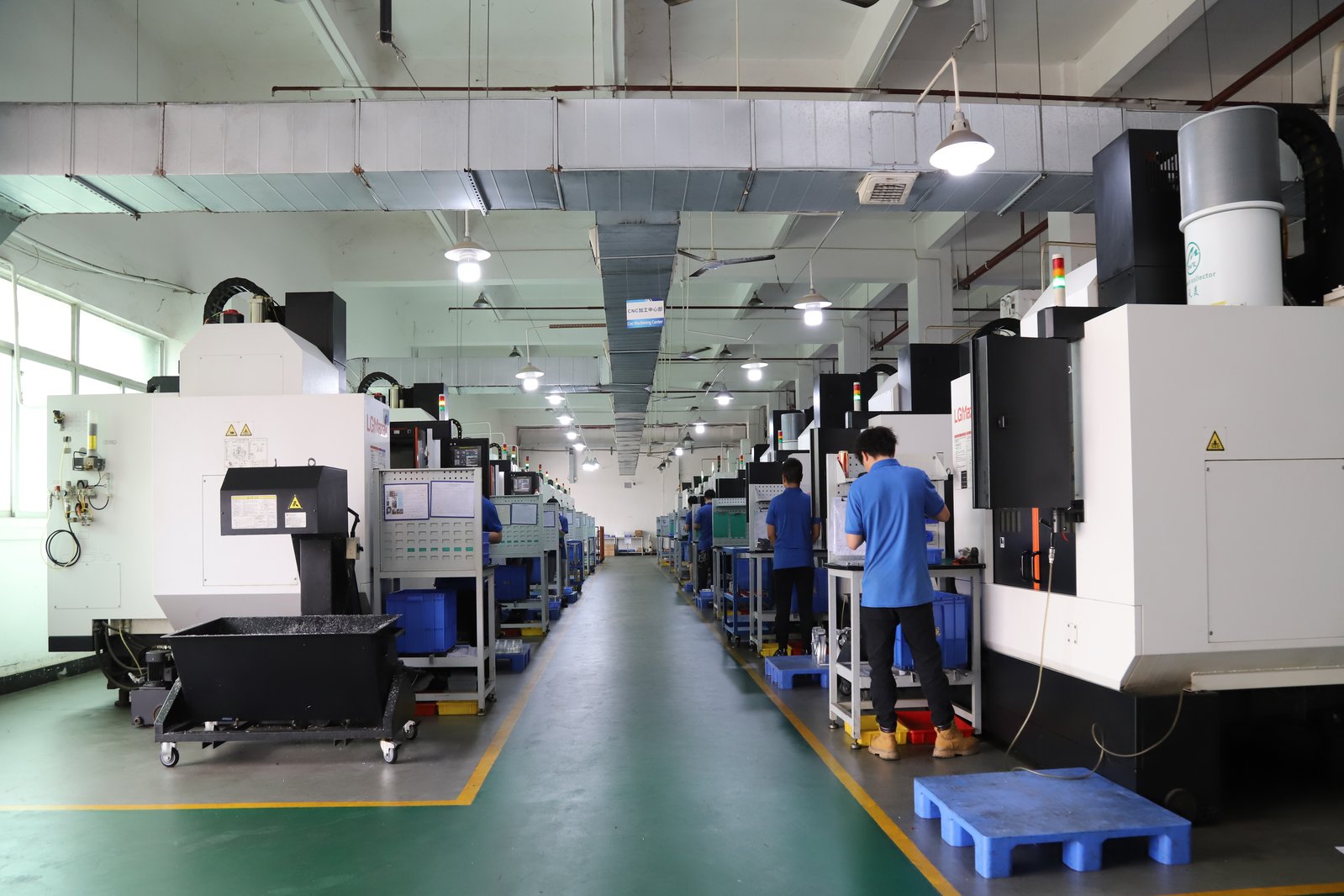
For a large share of parts sent to a precision machining company, the material decision comes down to two families: aluminum and stainless steel. Both machine well on any precision floor, both are available at predictable prices, and both are legitimate answers — for different reasons. Aluminum wins where weight, machinability, and cost dominate; stainless wins where corrosion, temperature, or toughness dominate. The decision turns on the load and the service environment, not on habit or preference. This guide walks a buyer through the comparison on the axes that matter before ending in a decision table you can run against your own part.
Why is the material decision really a question about the load and the environment?
Machined parts are specified in material because the material is what carries the load and survives the environment. Aluminum and stainless are not interchangeable stand-ins for each other; they sit on different parts of the strength-to-weight and corrosion maps, and choosing between them without naming the load and the service environment is guessing. The disciplined sequence is to write down what the part must do — the load, the temperature, the exposure — and then ask which family answers it at the lower cost. The material that meets the requirement at the lower cost is the material the drawing should name.
There is a second reason the decision deserves structure rather than habit: the material drives the machining economics as much as the properties. A part redesigned from stainless to a high-strength aluminum can be cheaper to machine and lighter in service, while a part moved from aluminum to stainless because of corrosion is buying the right property at a predictable machining cost. When the buyer understands which axis the decision is being made on — weight, corrosion, temperature, or cost — the trade-off between the families becomes a calculation instead of an argument.
How do the mechanical properties compare, and which axis decides?
On raw strength, the families overlap far more than the labels suggest. 6061-T6 aluminum offers a good strength-to-weight ratio at low cost; the 7xxx alloys like 7075-T6 deliver yield strengths in the range of many steels at roughly a third of the density, which is why they dominate airframe structure. On the stainless side, 304 and 316L offer moderate strength with excellent corrosion resistance, while the precipitation-hardening grades like 17-4PH deliver high strength after aging — well above the annealed 300-series — which is why they appear in actuators, shafts, and structural fittings.
The decision axis is therefore not "which is stronger" but "which property does this part actually need." Where the load is dominated by weight and the environment is mild, aluminum wins. Where the load is dominated by corrosion, temperature, toughness, or fatigue in a demanding environment, stainless wins. Where the part must survive repeated sterilization, resist galling against a hard counterface, or hold a sealing surface in a corrosive medium, the stainless family is usually the answer. Name the load and the environment first, and the family names itself.
What does corrosion resistance mean for a machined part, and when does it not matter?
Corrosion resistance is the property most often misapplied to machined parts. If the part lives in a humid, saline, or chemically exposed environment, the corrosion behavior is part of the design and stainless — or a protective finish on aluminum — is part of the specification. If the part lives inside a controlled assembly, a dry housing, or a sealed unit, the corrosion story may be irrelevant, and bare or anodized aluminum is a legitimate, cheaper choice. The trap is assuming stainless is automatically "better" without checking what the service environment actually demands.
When corrosion is a real requirement, the material and the finish interact and should be specified together: an anodized 6061 part behaves differently from a bare one, and a passivated 316L part differently from one that skipped passivation. 316L earns its place over 304 specifically through its molybdenum content, which improves resistance to chlorides and saline exposure. When corrosion is not a requirement, naming that in the specification keeps the part bare or simply finished, faster to machine, and cheaper, and the decision can be revisited if the service data later says otherwise.
How does machinability differ between aluminum and stainless on a precision floor?
Machinability is where the families diverge most sharply, and it drives both cost and lead time on any precision machining floor. Aluminum — 6061-T6 above all — is the easiest material to machine in common use: it cuts at high speeds, produces predictable chips, holds a good finish, and rarely fights the tool. Stainless is a family with a range: 303 is free-machining and cuts almost as easily as aluminum, while 304 and 316L work-harden at the cutting edge if the tool rubs, and the precipitation-hardened grades are machined in the annealed state and aged afterward. The same geometry carries more machine time in stainless than in aluminum.
For the buyer the machinability gap shows up in the quote and the schedule. An aluminum part cuts fast and lands on a shorter delivery tier; a stainless part of the same geometry runs longer and may sit on a longer tier, and a 17-4PH part adds a heat-treatment step. The gap is compounded by rigidity: stainless pushes harder on the tool and the fixture, so a thin-wall stainless feature needs more support and lighter cuts to hold its tolerance and finish. When the application allows either material, the machinability difference is a legitimate part of the decision, not a reason to avoid a needed property, but a reason to check whether the property is actually needed.
Which grade should a precision-machined part actually specify?
Aluminum and stainless are families, not materials, and a drawing that stops at the family name leaves the shop guessing. On the aluminum side, 6061-T6 is the default for most machined work — the best combination of machinability, strength, corrosion resistance, and cost — with 7075-T6 reserved for parts that genuinely need its strength. On the stainless side, 303 is the fast-machining grade for hardware, 304 is the general corrosion workhorse, 316L adds molybdenum for chlorides and saline service, and 17-4PH is the structural choice where strength plus corrosion matters. Naming the grade and condition tells the shop what to buy and how the part will machine.
The grade choice also shapes the inspection story. A 17-4PH part machined in Condition A and aged to H900 or H1025 carries a heat-treatment record as part of its material claim; a 6061-T6 part carries its temper in the stock designation and the mill certificate. When the drawing names the grade and the final condition, the supplier can buy to that spec, verify the incoming stock, and produce the certificate that ties the material to the drawing. A grade left unnamed is a substitution risk, and on a machined part a substituted alloy can pass every dimension and fail in service.
How does the cost compare between aluminum and stainless?
Material is only half of the cost difference; machinability is the other half. Aluminum stock costs less per kilo than stainless, and it cuts in a fraction of the time, with less tool wear and fewer surprises. Stainless costs more per kilo, cuts slower, and wears tools faster, and the harder grades add heat-treatment steps. The cost gap is real on both the material line and the machining line, and it widens as the part gets more complex, because every operation runs longer in the harder material.
The buyer's frame should not be "aluminum is cheaper, why would anyone use stainless" but "what is the least expensive material that meets the load and the environment." When the environment is mild and the load is weight-critical, aluminum is not a compromise; it is the engineering answer. When corrosion, temperature, or toughness is the requirement, stainless is not a premium; it is the price of the part surviving. The quality page on this site shows the inspection evidence — material certificates and dimensional reports — that makes the material decision verifiable once it is made.
Aluminum vs. stainless for a precision-machined part: a decision table
Run the table against your own part, its load, and its service environment. The right answer is the material that meets the requirement at the lower total cost:
| Axis | Aluminum (6061-T6 / 7075-T6) | Stainless (303 / 304 / 316L / 17-4PH) |
|---|---|---|
| Best for | Weight-critical parts, housings, brackets, heat-sink hardware | Corrosion, temperature, and toughness-critical parts; structural fittings |
| Machinability | Excellent; fast cycles, predictable chips, easy finishes | 303 is near-aluminum ease; 304/316L work-harden; 17-4PH machined soft and aged |
| Relative cost | Lower — cheaper stock and fewer machine hours | Higher — costlier stock and more machine time |
| Strength | 6061 good for weight; 7075 approaches steel strength at lower density | 304/316L moderate; 17-4PH high after aging |
| Corrosion | Good with anodizing; bare aluminum tarnishes and pits in saline service | Excellent bare; 316L adds chloride resistance; passivation enhances 300-series |
| Temperature | Strength falls above roughly 150 °C; excellent thermal conductivity | Holds strength to far higher temperature; 17-4PH good to about 300 °C |
| Precision notes | Stable in thin sections; conducts heat out of the cut | Thin-wall stainless needs support and lighter cuts; more tool pressure |
When the majority of the rows that matter to your part point one way, the decision is made. When they split — weight points to aluminum but the environment points to stainless — the tie-breaker is the service requirement: a part that fails by corrosion has failed regardless of how light it was, and a part that fails by excess weight has failed regardless of how stainless it was. Name the requirement that must not fail, and the family follows.
Thin-wall and high-aspect features add a machining-behavior layer to the grade choice. Aluminum conducts heat away from the cut and holds dimensional stability well in thin sections, which is why it dominates thin-wall housings and heat-sink fins; stainless conducts heat poorly and work-hardens, so a thin-wall stainless feature needs lighter cuts and more support to hold its tolerance and finish. When a part is thin-walled, the material decision is not only about service properties — it is also about whether the geometry can be machined to the drawing in that material at a sensible cost, and the supplier's read on that question belongs in the quote.
What should you send so the material decision is made on evidence?
A material decision is only as good as the requirement it is made against, so the RFQ should state the service environment and the load, not just the geometry. Send the model, the 2D drawing, and a line on where the part will live and what it must carry. Ask the supplier to confirm the material it would quote and why, and to flag any grade on your drawing that is doing more work than the application needs. A shop that engages with the load and the environment rather than just pricing the geometry is a shop that will get the material decision right.
Where the material carries real behavior — corrosion, temperature, strength — put the evidence requirements in the RFQ: a material certificate with the heat number, and the heat-treatment or finish records the part needs. The drawing grade means nothing if the stock on the machine came from a different lot, and the certificate is what ties the material to the drawing. The same discipline applies to the finish system: an anodize or a passivation is part of the material-and-surface claim, so the finish record should travel with the certificate. For the material range and the verification practice, the parts page on this site shows the geometry typically specified in each family, and the FAQ page answers the material and grade questions buyers raise most often.
Frequently Asked Questions
Is aluminum or stainless better for a precision-machined part?
Neither is better in the abstract — the right material is the one that meets the load and the service environment at the lower total cost. Aluminum wins on weight, machinability, and cost; stainless wins on corrosion, temperature, and toughness. Name the requirement that must not fail, and the family follows.
Which aluminum grade is best for a machined part?
6061-T6 is the default: the best combination of machinability, strength, corrosion resistance, and cost. Reserve 7075-T6 for parts that genuinely need its strength, and name the temper — T6, T651, T7351 — on the drawing so the stock is bought to the right condition.
Which stainless grade should a machined part use?
303 is the fast-machining hardware grade; 304 is the general corrosion workhorse; 316L adds molybdenum for chlorides and saline service; 17-4PH is the structural choice where strength plus corrosion matters. Name the grade and the final condition on the drawing.
Why is stainless machining more expensive than aluminum?
Because the stock costs more and the material machines slower — 304 and 316L work-harden at the cutting edge, and 17-4PH adds a heat-treatment step. The cost gap is real on both the material and the machining lines, so the decision should be made on the properties the part actually needs.
Does aluminum need a finish to resist corrosion?
Only where the service environment demands it. Bare aluminum tarnishes and pits in humid, saline, or chemical service, so a corrosive environment points to stainless or anodized aluminum. Inside a controlled or dry assembly, bare aluminum is a legitimate choice.
Can 7075 aluminum replace stainless on a machined part?
On strength and weight, often yes — 7075-T6 approaches many steel strengths at a third of the density. It cannot replace stainless where corrosion resistance or temperature capability is the requirement. The decision hinges on which axis the part actually needs, not on strength alone.
What documents prove the material on a machined part is what the drawing says?
A material certificate with the heat or lot number, tied to the stock that was actually cut, plus the heat-treatment or finish records the part needs. The certificate is what connects the drawing grade to the physical part, and it should be required in the RFQ from the first order. Confirm the certificate format at quoting stage so it arrives with the parts rather than after them.
Deciding between aluminum and stainless for a precision-machined part, and unsure which grade matches your load and service environment?
Send the model, the drawing, and a line on where the part will live and what it must carry. You will get back a material recommendation with the reasoning, the grade and condition to specify, and a quote that shows the cost impact. Email [email protected] or call +86 13126536955.